

 English




What Height Requires a High Bay Light Lift
March 4, 2026
A high bay lift is typically required when lighting fixtures are installed at heights where standard ladders are no longer safe or practical. In most industrial environments, this threshold begins around 6 meters or 20 feet. Once ceiling height exceeds this range, maintenance becomes more complex, costly, and risky.
Warehouses, manufacturing plants, sports arenas, and exhibition centers often feature ceilings ranging from 8 to 20 meters. At these elevations, replacing drivers, cleaning lenses, or upgrading fixtures using scaffolding or boom lifts can disrupt operations and increase safety hazards. Installing a permanent high bay lift provides a safer and more efficient alternative.
Understanding High Bay Lighting Heights
High bay lighting is designed specifically for large spaces with tall ceilings. The higher the fixture is mounted, the wider and stronger the light distribution must be. However, increased height also means more difficult access during maintenance.
Below is a general reference for when a lift system becomes recommended:
| Ceiling Height | Maintenance Difficulty | Recommended Solution |
|---|---|---|
| 4–6 meters | Moderate | Ladder access possible but risky |
| 6–8 meters | High | Strongly consider lift system |
| 8–12 meters | Very High | High bay lift recommended |
| 12–20 meters | Extreme | High bay lift system essential |
Once fixtures exceed 6 meters, many facility managers begin evaluating permanent lifting solutions to reduce long-term maintenance costs.
Why Height Changes the Maintenance Strategy
The main issue with height is not just accessibility but risk management. As elevation increases, the likelihood of falls and equipment instability also rises. In active industrial spaces, moving scissor lifts or scaffolding through narrow aisles can interrupt production and create hazards.
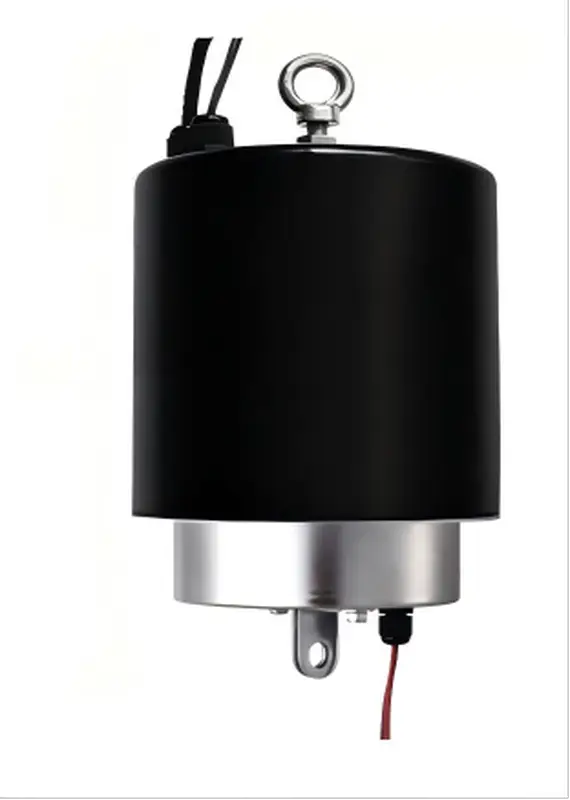
A professionally engineered high bay light lift system allows fixtures to be lowered safely to ground level for servicing. This eliminates repeated rental of aerial equipment and minimizes operational downtime.
Height also affects labor costs. The taller the ceiling, the more time and manpower required for safe access. Over time, investing in a lift system significantly reduces recurring expenses.
Industry-Specific Height Requirements
Different industries have varying ceiling standards, which influence whether a high bay lift is necessary.
Warehouses often have ceiling heights between 8 and 15 meters. In these environments, lighting maintenance without a lift system can disrupt storage operations and logistics flow.
Manufacturing facilities frequently operate with 10 to 18 meter ceilings to accommodate machinery. In such cases, a high bay lift becomes an essential infrastructure component rather than an optional accessory.
Sports arenas and exhibition halls may exceed 20 meters in height. At these levels, traditional maintenance methods are inefficient and potentially dangerous. Permanent lift systems provide controlled, safe vertical movement for heavy industrial luminaires.
Safety Standards and Compliance Considerations
Workplace safety regulations in many regions impose strict guidelines for working at height. When lighting fixtures are mounted above 6 meters, employers must implement enhanced fall protection measures. This increases compliance costs and administrative complexity.
Installing a high bay lift simplifies safety management. Workers perform maintenance at ground level, reducing liability and improving compliance with occupational safety standards.
A reliable manufacturer designs systems with load-tested cables, anti-fall mechanisms, and precision motor control to ensure safe operation in demanding environments.
Choosing the Right High Bay Lift for Your Ceiling Height
Not all lift systems are identical. Ceiling height determines cable length, motor capacity, and load-bearing requirements. For example, fixtures mounted at 12 meters require longer suspension systems and more robust structural engineering than installations at 7 meters.
Partnering with a professional high bay lift factory ensures the system is tailored to your building structure and fixture weight. Customization options may include different lifting speeds, control methods, and safety locking mechanisms.
It is also important to consider fixture weight. Modern LED high bay lights are lighter than traditional metal halide units, but industrial models can still require strong load support. Always verify load capacity before installation.
Cost Considerations Based on Height
The taller the installation, the greater the return on investment for a lift system. Facilities with ceilings above 10 meters often recover installation costs quickly due to reduced equipment rental and lower labor expenses.
At moderate heights of 6 to 8 meters, decision-making may depend on maintenance frequency. If lights require frequent servicing, a lift system remains a cost-effective solution even at lower elevations.
For very high ceilings above 15 meters, a high bay lift is often considered essential infrastructure rather than a convenience feature.
Long-Term Operational Advantages
Installing a high bay lift is not just about reaching lights. It improves overall facility efficiency. Maintenance becomes faster, safer, and more predictable. Lighting upgrades can be completed without shutting down large sections of the building.
As more facilities transition to energy-efficient LED systems, easy access for inspection and upgrades becomes increasingly valuable. A permanent lift solution ensures future adaptability without additional structural modifications.
Conclusion
A high bay lift is generally recommended when ceiling height exceeds 6 meters, and it becomes essential above 8 to 10 meters. The higher the ceiling, the greater the safety risk and maintenance cost without a dedicated lifting system.
For warehouses, factories, and large commercial spaces, installing a professionally engineered high bay light lift system transforms lighting maintenance from a high-risk task into a routine ground-level operation. Choosing an experienced manufacturer ensures the system matches your building height, fixture load, and long-term operational needs.