

 English




What Is a High Bay Light Lift and Why Do You Need One
March 3, 2026
What Is a High Bay Light Lift
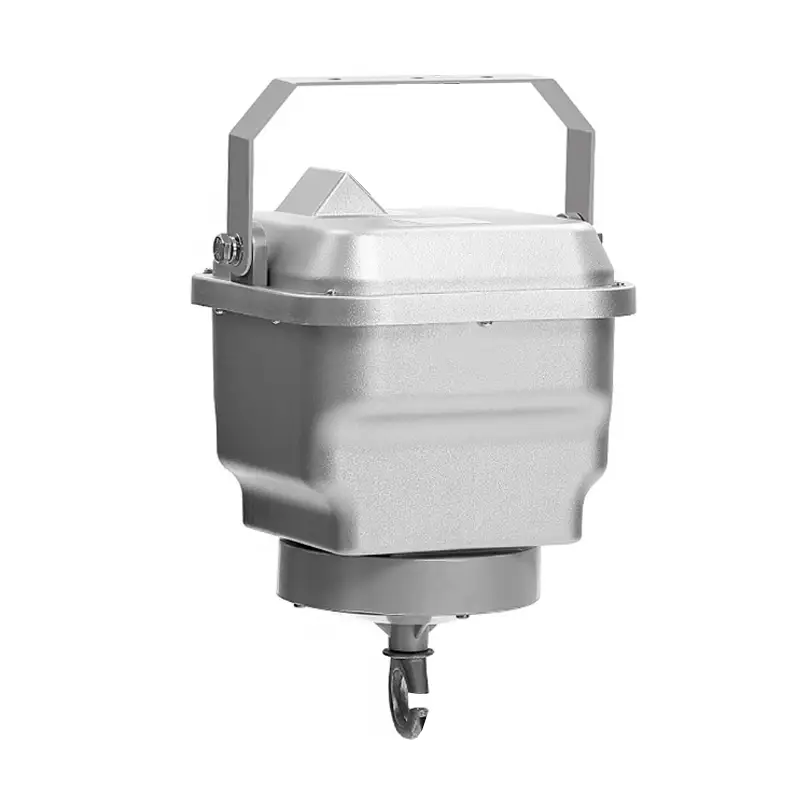
A high bay light lift is a mechanical lifting device designed to safely lower and raise high-mounted lighting fixtures in industrial spaces. Instead of using scaffolding, ladders, or boom lifts, a high bay lift allows maintenance teams to bring the light fixture down to ground level for easy servicing.
In large facilities such as warehouses, logistics centers, factories, and gymnasiums, lighting fixtures are often installed 8 to 20 meters above the floor. Replacing bulbs, drivers, or entire luminaires at that height can be costly and risky. A modern high bay lift eliminates these challenges by creating a controlled, motorized lowering system that improves safety and efficiency.
This system is typically mounted near the ceiling structure and connected to the high bay fixture. With a remote controller or switch, the fixture can be lowered smoothly for maintenance and raised back into position once work is complete.
How a High Bay Lift Works
A high bay lift operates using a motor-driven cable drum mechanism. The lighting fixture is attached to a suspension cable and guided by safety lines to ensure stable movement. When activated, the motor winds or unwinds the cable, allowing the fixture to move vertically in a controlled manner.
A professional bay light lift system is engineered with safety locking devices, overload protection, and precision control to prevent accidental drops. High-quality systems also feature anti-twist cables and durable structural frames to handle heavy industrial luminaires.
Because the lift is permanently installed, maintenance becomes a routine ground-level task instead of a high-risk operation requiring external equipment rental.
Why Industrial Facilities Need a High Bay Lift
Safety is the primary reason companies invest in a high bay lift. Working at height is one of the leading causes of workplace injuries. Using ladders or scaffolding in busy production areas increases the risk of falls, collisions, and downtime.
A high bay lift reduces the need for workers to operate at dangerous heights. Maintenance personnel can service lights from the ground, minimizing accidents and improving compliance with safety regulations.
Cost efficiency is another major advantage. Renting boom lifts or erecting scaffolding repeatedly adds significant maintenance expenses. Over time, installing a permanent lift system reduces operational costs and shortens maintenance cycles.
Productivity also improves. In warehouses and manufacturing plants that operate around the clock, shutting down aisles or production lines to access ceiling fixtures disrupts workflow. A high bay lift allows targeted, quick servicing without large-scale interruptions.
Key Applications of High Bay Light Lift Systems
High bay lift systems are widely used in industrial and commercial buildings with tall ceilings. Warehouses rely on them to maintain LED high bay lighting efficiently. Manufacturing facilities use them to reduce production downtime. Exhibition halls and sports arenas benefit from quick lighting adjustments and maintenance.
Aircraft hangars, logistics centers, and cold storage facilities also prefer lift systems because access equipment can be difficult to maneuver in these environments.
For large-scale industrial projects, choosing an experienced high bay lift factoryensures the system meets structural load requirements and complies with safety standards.
Advantages Over Traditional Maintenance Methods
Traditional lighting maintenance methods involve ladders, scaffolding, or hydraulic lifts. These approaches are labor-intensive and often require multiple workers. They also increase liability risks and insurance costs.
In contrast, a high bay lift provides a permanent engineered solution. It offers stable vertical movement, controlled descent speed, and secure locking mechanisms. The installation cost is quickly offset by reduced rental fees and lower labor hours.
Additionally, modern LED high bay lights are long-lasting, but drivers and components may still require periodic servicing. A lift system makes preventative maintenance practical and affordable.
Choosing the Right High Bay Lift
Selecting the right high bay lift depends on ceiling height, fixture weight, frequency of maintenance, and building structure. Load capacity is a critical factor. Industrial luminaires can weigh significantly more than standard commercial lights.
Motor reliability and cable durability are also important. High-quality galvanized steel cables and precision gear motors ensure long-term performance. Safety features such as emergency stop functions and anti-fall mechanisms should never be compromised.
Working with a specialized manufacturer helps ensure the system is tailored to your project’s technical requirements. Engineering support, installation guidance, and after-sales service are key considerations for long-term performance.
Why Professional Manufacturing Matters
A professionally engineered lift system is not just a mechanical accessory; it becomes part of your building’s infrastructure. Poor-quality systems may lead to uneven lifting, cable wear, or safety hazards.
Manufacturers with industrial experience design systems that withstand vibration, dust, and temperature variations commonly found in factories and warehouses. Proper testing, load verification, and structural certification ensure reliable performance over years of operation.
Partnering with a dedicated supplier also provides customization options for different ceiling heights and lighting configurations.
Long-Term Value of Installing a High Bay Lift
Although installing a high bay lift requires initial investment, the long-term return is substantial. Reduced maintenance downtime, lower labor costs, improved safety compliance, and simplified lighting upgrades all contribute to operational efficiency.
As industrial facilities continue adopting energy-efficient LED lighting, having a safe and accessible maintenance solution becomes even more important. A high bay lift is not just a convenience; it is a strategic improvement to facility management.
For warehouses, factories, and large commercial buildings, investing in a reliable high bay lift system ensures lighting maintenance remains safe, efficient, and cost-effective for years to come.