

 English




Why Do High Ceilings Require Lighting Lift Systems for Safe and Efficient Maintenance?
March 23, 2026
High ceilings require lighting lift systems because traditional maintenance methods—such as scaffolding, ladders, or aerial lifts—are inefficient, costly, and often unsafe at height. Lighting lift systems allow fixtures to be safely lowered to ground level for installation, cleaning, and repair, eliminating the need for risky elevated work. In large-scale commercial and industrial environments, this not only improves worker safety but also reduces downtime, labor costs, and operational disruptions. For facilities managers and procurement teams, especially those sourcing from a reliable light lift wholesaler, these systems represent a long-term investment in efficiency and compliance.
What Challenges Do High Ceilings Create for Lighting Maintenance?
High ceilings, typically found in warehouses, factories, airports, auditoriums, and religious buildings, present unique operational challenges. Lighting fixtures in these spaces are often installed at heights ranging from 8 to over 30 meters, making routine maintenance complex.
Safety Risks
Maintenance personnel working at height face increased risks of falls, equipment instability, and accidents. Regulatory bodies across different regions enforce strict workplace safety standards, making traditional access methods less desirable.
High Operational Costs
Using scaffolding or mobile lifts involves:
- Equipment rental or purchase costs
- Skilled labor requirements
- Extended downtime for setup and dismantling
Disruption to Operations
In facilities like logistics centers or production plants, halting operations to service lighting can lead to significant productivity losses.
Lighting lift systems directly address these issues by enabling ground-level servicing, minimizing both risk and disruption.
How Do Lighting Lift Systems Work?
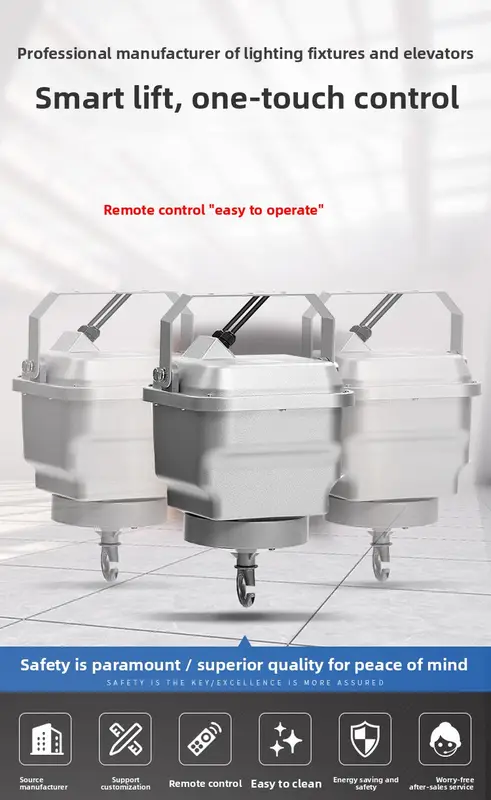
Lighting lift systems are engineered mechanical or motorized solutions designed to raise and lower lighting fixtures vertically. They typically consist of a winch mechanism, suspension cables, and a control system.
Key Components
- Drive unit (manual or motorized)
- Suspension cable (steel or high-strength composite)
- Mounting frame and safety locking system
- Control interface (remote or wall-mounted)
Operational Process
The fixture is securely mounted to the lift system. When maintenance is required, the system lowers the fixture to an accessible height. After servicing, it is raised back into position and locked securely.
For example, a chandelier motorized lift system allows large decorative fixtures in hotels or theaters to be lowered smoothly for cleaning or bulb replacement without scaffolding.
What Types of Lighting Lift Systems Are Used in High Ceiling Applications?
Different environments require specialized lift systems tailored to lighting type, weight, and usage frequency.
Industrial High Bay Systems
In factories and warehouses, high bay lights are commonly used. A dedicated high bay lift system enables safe maintenance of heavy-duty fixtures installed at significant heights.
Architectural and Decorative Systems
Luxury spaces such as hotels, museums, and churches often use large chandeliers. Motorized lift systems ensure these fixtures can be maintained without damaging delicate structures.
Specialized Application Systems
Healthcare and laboratory environments may use UV lighting for sterilization. A UV sterilization lamp lift ensures safe handling and maintenance while minimizing human exposure.
Why Should Businesses Work with a Light Lift Wholesaler?
For B2B buyers, sourcing from a professional light lift wholesaler offers several advantages beyond just product availability.
Cost Efficiency at Scale
Wholesalers provide competitive pricing for bulk orders, making them ideal for large projects such as:
- Industrial facility upgrades
- Airport lighting systems
- Commercial building retrofits
Customization Capabilities
A reliable wholesaler can tailor solutions based on:
- Ceiling height
- Fixture weight
- Electrical requirements
- Installation environment
Technical Support and Compliance
Experienced suppliers understand international safety standards and can provide guidance on:
- Load capacity calculations
- Installation best practices
- Certification requirements
This ensures the system not only performs efficiently but also meets regulatory expectations.
What Are the Key Benefits of Lighting Lift Systems?
Lighting lift systems deliver measurable benefits across safety, cost, and operational efficiency.
Comparison of Maintenance Methods
Table 1: Lighting Maintenance Methods for High Ceilings
| Method | Safety Level | Cost Efficiency | Downtime | Ease of Maintenance |
|---|---|---|---|---|
| Scaffolding | Low | Low | High | Complex |
| Aerial Lift | Medium | Medium | Medium | Moderate |
| Ladder | Low | High | Low | Unsafe at height |
| Lighting Lift System | High | High | Low | Easy (ground level) |
Key Advantages
- Enhanced worker safety
- Reduced maintenance time
- Lower long-term operational costs
- Minimal disruption to business activities
For facility managers, these benefits translate directly into improved ROI and operational reliability.
Contact us today to find the right lighting lift solution for your project
How Do Lighting Lift Systems Improve Long-Term Facility Management?
Lighting lift systems are not just a maintenance tool—they are a strategic asset in facility management.
Predictable Maintenance Scheduling
With easy access to fixtures, maintenance can be performed regularly, extending the lifespan of lighting systems.
Reduced Labor Dependency
Fewer specialized workers are needed, as maintenance can be carried out safely at ground level.
Energy Efficiency Optimization
Regular cleaning and timely replacement ensure optimal light output, reducing energy waste.
Compliance and Risk Reduction
By minimizing work at height, companies can better comply with occupational safety regulations and reduce liability.
Frequently Asked Questions (FAQ)
What is the maximum height a lighting lift system can handle?
Most systems are designed for heights ranging from 5 to 30 meters, with custom solutions available for higher installations.
Are lighting lift systems suitable for retrofitting existing buildings?
Yes, many systems are designed for both new installations and retrofits, depending on structural compatibility.
How much weight can a lighting lift system support?
Load capacity varies by model, typically ranging from 15 kg to over 200 kg for industrial applications.
Do lighting lift systems require frequent maintenance?
They require minimal maintenance, usually periodic inspection of cables, motors, and safety locks.
Is installation complex?
Professional installation is recommended, but experienced wholesalers often provide technical guidance and support.
Why Choose Hontrix as Your Lighting Lift Partner?
Hontrix is a trusted manufacturer and global supplier specializing in advanced lighting lift systems for commercial, industrial, and architectural applications. With a strong focus on engineering precision, safety compliance, and customization, Hontrix delivers reliable solutions tailored to diverse project requirements. Whether you are sourcing as a contractor, distributor, or facility manager, partnering with an experienced light lift wholesaler like Hontrix ensures consistent quality, competitive pricing, and long-term technical support.