English




Why Chandelier Lifts and High Bay Light Lifts Could Be the Next Explosive Growth Home & Commercial Product
February 6, 2026
Instruction:In this article, you will read about how traditional hanging lighting faces persistent practical challenges, why the rise of smart home technology is transforming lighting fixtures into connected devices, and how broader societal shifts toward decentralized living are creating new demand for products like chandelier lift system, high bay light lifts, and UV light lifts. We’ll also examine authoritative market projections showing that decorative lighting and smart lighting markets are poised for continued expansion, making lighting lift systems an underrated opportunity for future growth.
1. The Practical Problem: Hard to Reach Hanging Lights
Large chandeliers, industrial fixtures, and suspended fluorescent or LED lights are often installed in areas with high ceilings, such as foyers, grand living rooms, warehouses, gyms, or large commercial spaces. These fixtures look beautiful, but cleaning and maintenance remain significant pain points:
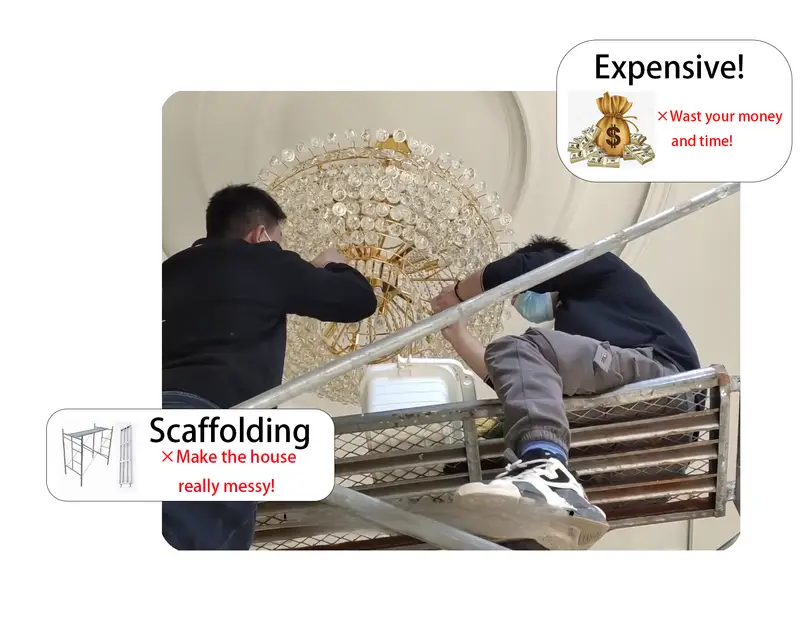
Safe Access is Difficult: To clean or replace bulbs on a high hanging chandelier traditionally requires dangerous ladder work or professional teams to erect scaffolding.
High Professional Service Costs: Hiring a cleaning team for scaffolding setup and teardown can easily cost hundreds to thousands of dollars per visit, depending on height and location.
Health & Aesthetics Affected by Dust: If chandeliers are left uncleaned due to cost or inconvenience, dust buildup not only degrades aesthetic appeal but also affects indoor air quality, which can contribute to allergies and respiratory discomfort in occupants.

Consumer Frustration Drives Innovation: This recurring maintenance burden creates ongoing demand for systems that make access simpler, safer, and more affordable.
Chandelier lifts and light lifting systems directly solve this problem by bringing fixtures down to reach level with the press of a button, significantly lowering maintenance complexity and service costs.
2. Booming Smart Home and IoT Adoption
Another major driver of future growth for lighting lifts is the global acceleration of smart home adoption and the Internet of Things (IoT):
The global smart home market was valued at over $155.8 billion in 2024 and is projected to exceed $175 billion by 2025, highlighting strong consumer demand for connected devices.
Smart lighting—a key component of connected homes—is among the fastest growing segments, with forecasts showing double digit CAGR in intelligent lighting solutions over the next decade.
This trend reflects consumer willingness to adopt technologies that offer:
- Remote control via smartphone or voice assistants
- Scheduled automation
- Integration with broader home automation systems
- Energy usage tracking and optimization
Lighting lift products are natural candidates for this trend because they combine lighting with motorized control—making them inherently upgradeable through connectivity modules such as WiFi, Bluetooth, or Zigbee.
As more homes become connected, consumers will begin expecting not just lighting, but smart, serviceable, and integrated lighting solutions.
3. Shift Toward Decentralized Living (4th Consumption Era)
Looking ahead, society is moving into a new consumption phase where personalization, decentralization, and self directed living are increasingly valued:
The so called Fourth Consumption Era emphasizes experience, customization, and autonomy, contrasting with previous eras dominated by mass production and centralized services.
People are seeking more control over their living environments and are increasingly investing in their own homes, especially in self built houses and individualized dwellings versus uniform residential blocks. This trend is particularly visible in markets like the U.S., Canada, and parts of Europe, where custom homes and renovations dominate housing preferences.
In a world where individuals take more pride and investment in their personal spaces:
- Personalized lighting solutions become more valuable.
- Products that address user convenience and safety (like lighting lifts) become more appealing.
This social shift expands the potential consumer base for lighting lift systems beyond commercial and luxury market segments into mainstream residential use.
4. Market Size and Growth Trends: Why Lighting Solutions Still Matter
Even within the broader context of home lighting, data shows the decorative lighting market is not stagnant:
| Market Segment | 2024 Value | 2030/2032 Projection | Key Insight |
| Global Chandelier Market | ~$8.1B (2024) | ~$11.0B by 2033 (CAGR ~3.2%) | Decorative lighting remains a resilient market. |
| Smart Lighting Market | $15.8B (2024) | Growing at ~19.3% CAGR (202534) | Smart, connected lighting solutions are expanding rapidly. |
| Global Lighting Market | ~$100B+ by 2029 | Includes LED, smart and decorative lighting | Lighting overall remains a very large industry with room for niche innovation. |
These figures indicate that while decorative lighting such as chandeliers are a mature category, the broader smart lighting market is still accelerating—a trend that benefits derivative products like lighting lifts.
5.Innovative Opportunities in Lighting Lift Products
1. Smart Integration
Lighting lifts can evolve from simple motorized hardware to smart IoT devices that:
- Integrate with home automation systems (Alexa, Google Home, Apple HomeKit)
- Allow mobile control and scheduling
- Provide usage and maintenance insights
As IoT devices proliferate, devices that marry functionality and connectivity stand out.
2. Enhanced Safety & Automation
Beyond bringing down a chandelier, future lifts could incorporate:
- Automatic obstacle detection
- Health related sensors (dust or air quality alerts)
- Predictive maintenance reminders
These features increase product value and differentiate from legacy solutions.
3. Modular Ecosystem for New Builds & Retrofits
With people increasingly living in self built homes or renovating older ones, lighting lifts could be:
- Included in luxury custom builds
- Offered as premium retrofit solutions for smart homes
This expands potential markets beyond luxury interiors to everyday residential enhancements.
Conclusion
Chandelier lifts, high bay lift system, and similar solutions address tangible everyday problems like difficult maintenance, safety risks, and labor costs. They are uniquely positioned at the intersection of decorative lighting and smart home automation, tapping into booming market segments and societal trends that favor customizable, connected, and convenient living experiences.
As the smart home era unfolds and individuals take greater control of their living spaces, products that improve usability and integration—especially those that solve previously painful problems—are likely to see explosive growth and broader adoption in the years ahead.